
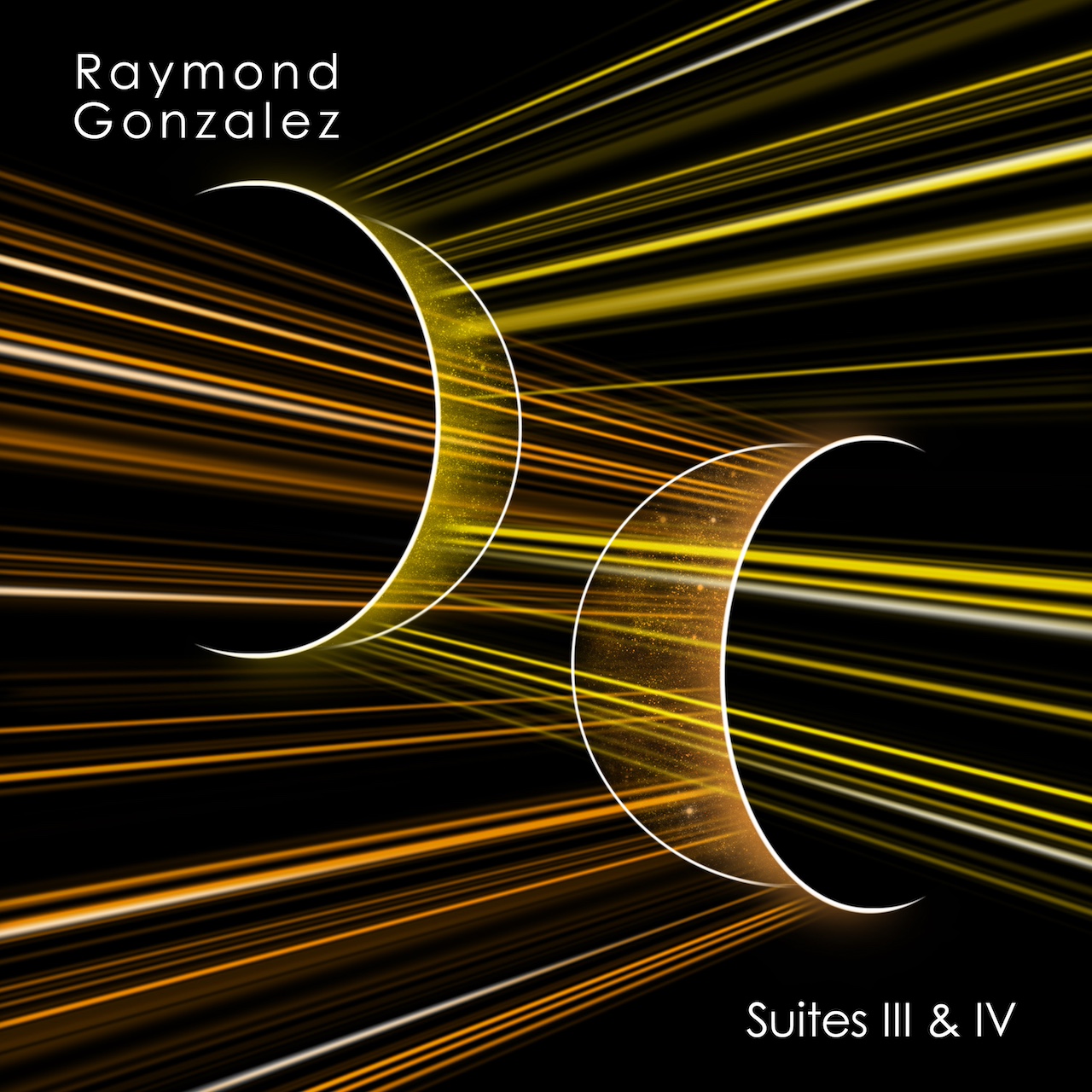
Suites III & IV 2024
Suites III & IV are a continuation of the first two suites, in that they are a full-on exploration of my electronic orchestra using everything melodic, harmonic, rhythmic and percussive at my disposal to create complete movements that would resemble anything from the Baroque, Classical, Romantic, and Impressionistic eras – only brought up to 2024. The forms (often ABA, ABCA or AB-coda), development of melody (you will always be able to follow the melodic thread in each mvt) and harmony (harmonic changes are very fluid – hopefully such that you might not notice) as a loose guide for each movement. Look for the melodic content anywhere within the movement, treble, middle, bass it can appear in the percussion or non-melodic sections as well. You never know. The rhythm combined with a melodic fragment might be the jumping off point to unfolding the theme. There are humorous moments that allow me to keep my perspective and not take my “artsy” self too seriously. I made greater use of driving rhythms in this collection to offset the more “modern” sounds that might cause the listener to loose focus. Rhythm being the great unifier.
Suite III goes deeper into the modern landscape, exploring more “challenging” sounds that might fall under, sound-environments, music-concrète and white-noise. This directly stretches and confounds the idea of what music and instruments are for. It is all still composition and orchestration (I keep saying that..) If you listen carefully there are melodic phrases and fragments, development of themes, harmonic motion and layers and layers of rhythmic activity. Pieces such as “Other Noises” and “Opening” might surprise you with their complexity, avant-garde musical environments, and industrial feel. Look for the distant spoken words in “Other Noises.” “Chant” is made up of modal and diatonic melodies used in a basic chant-like context. “Memory Fields” combines two disparate sections (AB) that often jolts the memory in awareness. At least it does for me.
Suite IV, backs off from the avant-garde just a bit and gives the listener (and composer) some breathing room after Suite III.
Phonai II (Strings & Glass) is the sister to a piece that I composed in 1979 [in college] called Phonai (voices) for piano, prepared piano, vibes, cello and flute. I found that if you take a glass and run it along the strings of a concert grand piano (pushing hard) the overtones begin to evolve slowly then start to reach higher registers becoming more piercing and closer together filling the hall with incredible “sounds” of metallic white noise. The prepared-piano player was also the vibes player for the original performance (Robin Hammer – I still remember her incredible performance after 45 years…) who really brought the piece to life. The Conservatory faculty weren’t pleased but I have a wonderful recording of that piece that still holds up today.
“A Prelude Just Now” is just that. All switches were on, and I let my imagination loose. 40 minutes later this piece was completed. As always there was editing but the initial idea remains intact.
“Choral” is the combination of an Early Music polyphonic vocal piece (in the background) with a mournful gospel piano in the foreground.
“Second Abstract” is the second in a series of “abstracts” (“First Abstract” on “Two Suites”) that have a similar rhythmic and harmonic construction.